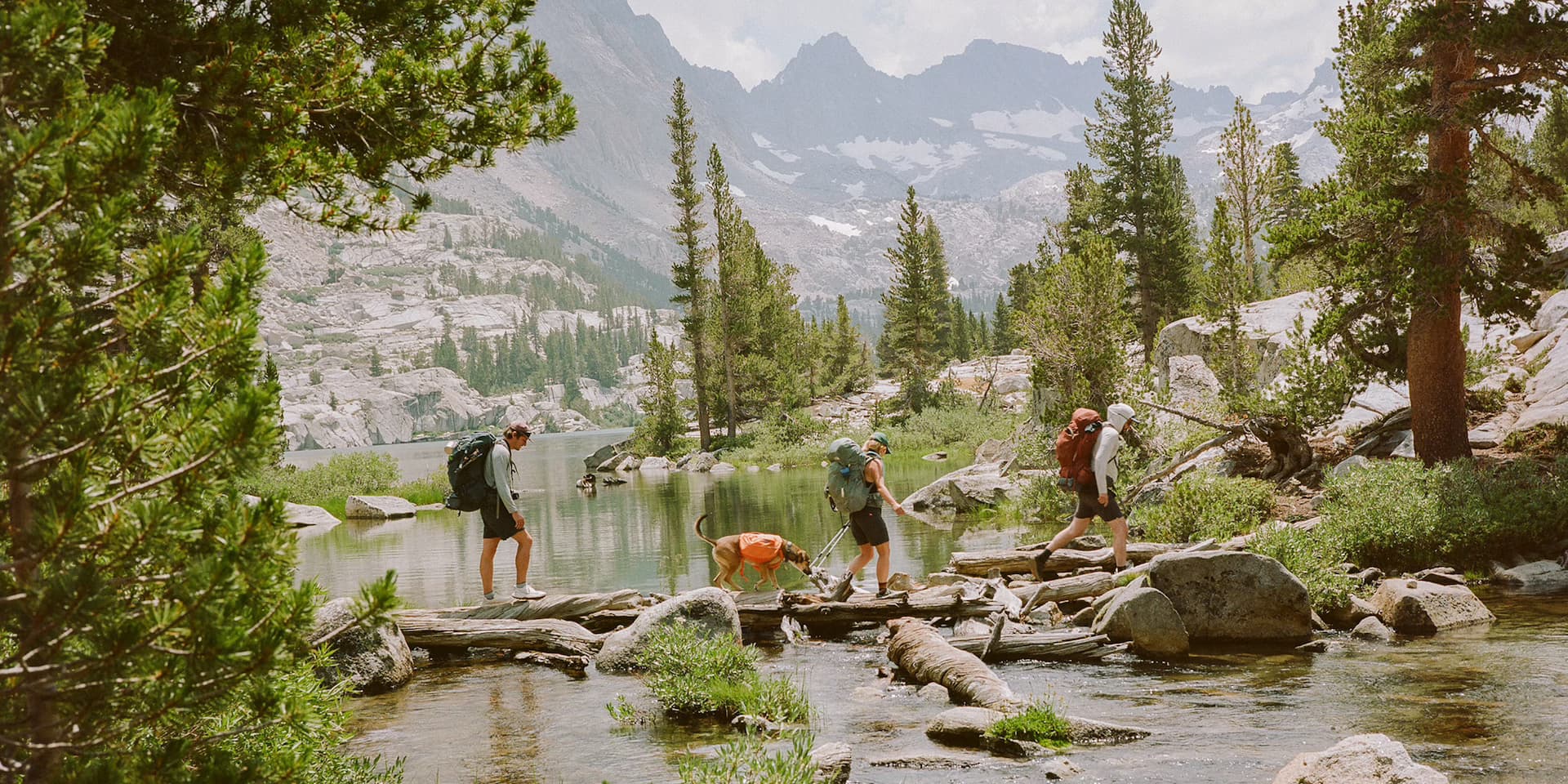
Backpacking opens up some of the most rewarding experiences the outdoors has to offer — days at a time on the trail, nights under the stars, and the satisfaction of carrying everything you need. But getting there takes a little preparation. Whether it’s your first overnight or a weeks-long backcountry route, we’ve gathered tips to help you get ready.
Getting started: your first trip out
If you’re new to backpacking, the goal is to set yourself up for a trip that’s fun, safe, and sustainable.
Start small and close to home. Choose a shorter trip at low altitude, and take it as a test run. If you forget something or hit a snag, you can easily head back — and you’ll learn what to adjust for next time.
Look up permits early. Check if you need permits to enter your route area or stay overnight. Permits shape where and when you’re able to go.
Don’t over pack. A good rule of thumb: your loaded backpack should weigh no more than about 20% of your body weight. Keep it light and you’ll enjoy the hike that much more.
Bring hiking poles. You’ll appreciate the extra stability while you get used to carrying your pack.
Going further: ready for a bigger trip
Once you’re comfortable with the basics and have a few trips under your belt, you can shift your focus to comfort and efficiency. You’ll want to carry less while staying just as prepared.
Refine your layers. Merino wool base layers are lightweight, help regulate temperature, and are naturally odor resistant. You can wear these day after day.
Weigh your gear and take notes. Weigh everything beforehand, then record what you used and didn’t. It’s the best way to spot weight worth cutting.
Shrink your toiletries. Keep any repellents and creams in travel-sized containers — and be sure to keep them safe from campsite critters, along with your food. That’s especially important in areas with bears. A multi-use concentrated soap that handles hands, dishes, and even hair and body will go a long way and last a long time.
Getting technical: when you’ve got serious miles behind you
At this point, every choice is a trade-off between weight and comfort. You’ll know which matters based on the trip you’re planning.
Balance trail time against camp time. Doing big miles? Go ultralight, with nothing unnecessary. Planning to linger at each campsite? Bring a few luxuries, like a light camp chair and sandals.
Make your own meals. Instead of pre-packaged backcountry food, try dehydrating your own and portioning exactly what you need per day. Food dehydrators are easy to find online or at kitchen appliance stores. Weigh each meal wet before drying, then again after. The difference tells you how much water to add at camp.
Know what dehydrates well. Cooked pasta and rice rehydrate beautifully. Skip eggs — the texture never recovers. And choose low-fat foods for anything prepped well in advance since oil doesn’t dehydrate.
Essential gear
Like the rest of your backpacking trip, what you pack is personal. But a few things earn their weight:
- An offline map. Plan, download, and print your backpacking route with AllTrails to fully navigate it with or without cell service. You can also download maps for other trails, entire areas, and parks so you have plenty of options to explore offline.
- A pack and footwear that fit. A multi-day pack sized to your frame that carries weight on your hips, and shoes suited to the terrain. Break those shoes in on multiple hikes before the trip to get them as comfortable as possible.
- Water and a filter. A bottle, a reservoir, or both, plus a way to treat water from natural sources.
- A first aid kit. Keep it small, and consider downloading PDF first-aid guides for extra peace of mind.
- Layers, sun protection, and a headlamp. The basics that keep you comfortable and safe as conditions shift from day to night.
- Camping gear. It’s up to you how lightweight to go on all of this, but ultimately your sleeping bag, pad, tent, and cooking set up should all suit the trail conditions of your route. Pay attention to the supported anchoring methods on your tent so that you’re prepared for the ground at your campsite, and compare the temperature rating for your sleeping bag to the conditions of the trail.
No matter how many days or miles you’re after, AllTrails will be there to guide you every step of the way. Check out our latest backpacking features for help planning and mapping your route.